How ceramic differs from porcelain
A ceramic tile is a clay body with a glaze fired on top. The glaze is the hard, cleanable surface; the body underneath is more porous. Porcelain is denser all the way through. For cleaning, that means three things:
- The glaze is what we protect. On a sound glaze we can work firmly. Where the glaze is thin or worn, we use softer pads and accept that the worn area will stay duller.
- Joints are wider. Older ceramic floors often have wider grout joints than modern porcelain, so grout makes up more of what you see. Clean grout changes how the whole floor looks.
- Edges and chips are porous. Dirt soaks into chipped corners and unglazed edges. Those spots improve, but rarely disappear.
Typical problems on older ceramic floors
- Grout gone from beige or white to grey or nearly black
- A dull, slightly sticky surface from years of floor cleaner that was never rinsed
- Darker traffic paths from the front door, terrace door and kitchen
- Patches of old wax or “shine” products that yellow and trap dirt
- Tile adhesive, paint or cement splashes left from past renovations

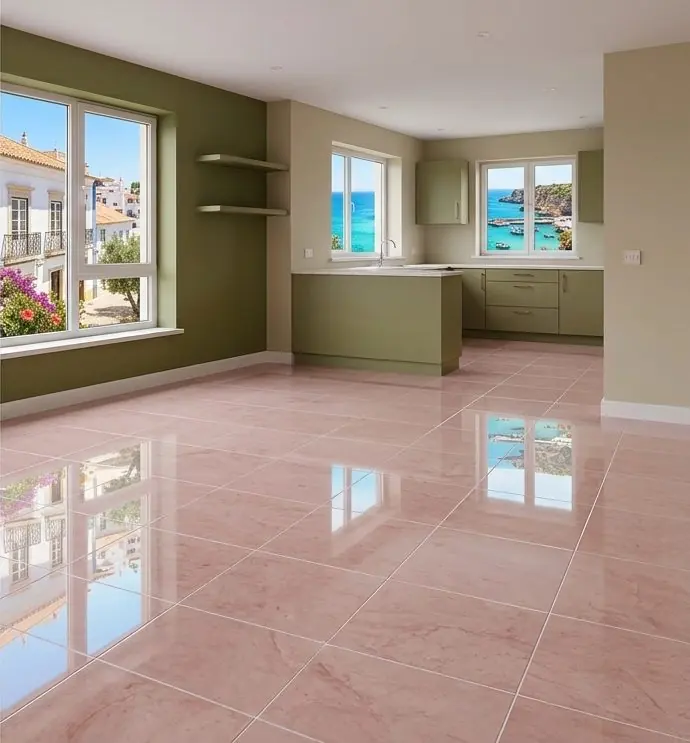
How we clean ceramic
- Check the glaze. We look for worn walkways, crazing (fine cracks in the glaze) and chips before choosing pads.
- Vacuum, then pre-treat. An alkaline cleaner breaks down body grease, food and old detergent film. Old wax needs its own remover.
- Machine scrub. The rotary machine works tile and joints together. Very dark joints get extra work with a grout brush.
- Extract and rinse. Wet-vacuum, rinse with clean water and extract again, so the joints aren’t left full of dirty water.
Full detail: how a tile deep clean works.
Dirt or wear?
The question that decides what a clean can achieve. A simple check: wet a dull patch with clean water. If it looks like the rest of the tile while it is wet and goes dull again as it dries, the glaze is probably worn or etched there. Cleaning will freshen it, but the shine won’t come back. If it stays dull and grey even when wet, it is more likely dirt or film, and that is what we remove.
Cleaning won’t fix crazed or worn glaze, chips, cracks, or grout that is stained right through or missing.
Price
€15 per m², the same as porcelain, grout included. +€2/m² when a very dirty floor needs an extra pass, +€5/m² for extremely dirty, heavy-use floors. Minimum job 50 m² (€750).
Ceramic cleaning questions
How do I know if my floor is ceramic or porcelain?
Look at a chipped edge or the side of a spare tile. Ceramic usually has a different-coloured body (often red or beige) under a glaze; porcelain is the same colour, or close to it, all the way through. If you can’t tell, send photos and choose “not sure”: the price is the same.
Can you bring back the shine on worn ceramic?
Where the shine is hidden under dirt and residue, yes. Where the glaze itself has worn away in walkways, no: that is wear, and cleaning can’t put glaze back.
My grout is very dark. Will it come up?
Grout that is dirty on the surface usually comes up a lot. Grout stained right through stays darker. Wider ceramic joints often improve the most, because there is more surface for the machine and brush to work on.
Do you clean terracotta (tijoleira)?
Unglazed terracotta that has been waxed or sealed needs stripping and resealing, which is a different job. Send photos and we’ll tell you straight whether our process suits it.
Ceramic tiles on the terrace as well? See terrace and patio tile cleaning. Just renovated? See after-builders floor cleaning.
Also see: porcelain floor cleaning · how to deep clean a tile floor yourself · areas we cover