Who this is for
- Builders and tilers who want the floor right before the client walks in.
- Owners after a renovation, living with a new floor that looks grey or patchy from day one.
- Property managers handing over a new or refurbished villa to an owner or the first guests.
What builders leave behind
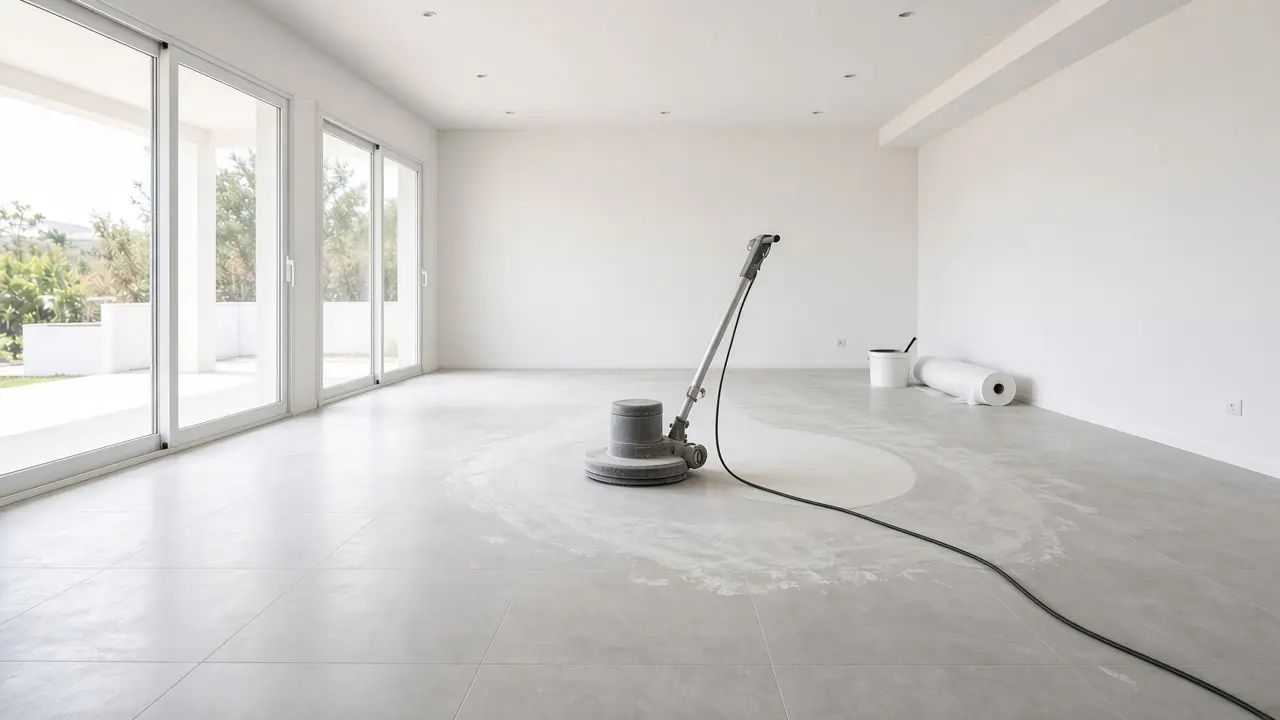
- Grout haze and cement film. A thin layer of grout or cement left on the tile face during installation. It shows as a dull grey veil, often worst on dark or matt porcelain.
- Plaster, paint and adhesive spots. Drips and splashes from the trades that came after the tiler.
- Site dust. Fine plaster and cement dust that settles into the grout lines and the texture of the tile and comes back every time the floor is wiped.
- Footprints and tool marks from weeks of boots on the floor.
Why mopping doesn’t shift it
Grout haze is not dirt sitting on the tile. It is a thin mineral film bonded to it, and ordinary floor cleaner doesn’t dissolve it. Mopping spreads the fine dust around and pushes it into the grout, and the haze is still there when the floor dries. More cleaner usually makes it worse, because it leaves its own sticky residue on top. If you want the background, our guide on removing grey film from porcelain explains how to tell haze from other films.
How we clean a new floor
- Check the grout type and the surroundings. We ask which grout was used, look for natural stone thresholds, sills and steps, and check metal trims.
- Hand work first. Paint, plaster and silicone spots are scraped off by hand, carefully, before any machine goes near them.
- Mask what acid would damage. Natural stone such as limestone thresholds and window sills is acid-sensitive, so we cover it. We clean ceramic and porcelain only.
- Wet the floor. Wetting first means the cleaner works on the haze instead of soaking straight into the grout.
- Apply the right remover and let it dwell. For cement-based grout haze, a buffered acid cleaner, given time to work. Epoxy grout haze needs a different, alkaline remover, which is why we ask which grout was used.
- Machine scrub. The rotary machine works the whole surface evenly, including the texture of matt and anti-slip tiles that a mop skims over.
- Wet-vac and rinse. We extract the slurry, rinse with clean water and extract again, so no residue or acid is left in the joints.
- Repeat where stubborn. Thick haze patches get another round rather than a stronger product.
The full method for lived-in floors is on tile and grout deep cleaning.
Before we arrive
- Rubble, offcuts and loose debris cleared by the builder. We clean the floor; we don’t clear the site.
- Grout cured, according to the tiler or the grout’s data sheet.
- Water and power available on site.
- Ideally, the other trades finished in the rooms we clean, so the floor stays clean.
Price
€15 per m², grout included. +€2/m² when the floor needs an extra pass, which is usual after builders with heavy haze or a lot of paint and plaster spots. +€5/m² for extreme cases. Minimum job 50 m² (€750). We quote from photos: a wide shot, a close-up of the worst haze or spots, and the thresholds and edges. In the quote form, mention “after builders” and the grout type in the notes.
After-builders cleaning questions
How soon after tiling can you clean?
The grout has to be properly cured first, so the cleaning products don’t attack it. Your tiler or the grout’s data sheet gives the waiting time; it is often a week or more. Tell us when the floor was grouted and we’ll plan around it.
Which grout was used, and why does it matter?
Cement-based grout haze comes off with a buffered acid cleaner. Epoxy grout haze doesn’t: it needs a different, alkaline remover, and acid won’t touch it. If you don’t know, ask your tiler or send a photo of the grout bag.
Do you clear rubble and offcuts?
No. The builder needs to clear rubble, offcuts and loose debris before we arrive. We deal with what is stuck to the floor: haze, film, spots and fine dust.
Can you clean the thresholds and sills too?
If they are porcelain, yes. If a threshold, sill or step is natural stone such as limestone, we mask it and leave it alone, because acid etches it. We clean ceramic and porcelain only.
Will it look like the showroom tile afterwards?
That is the aim, and on most new floors we get close. Deep scratches from site work, chips, and grout that was left patchy or smeared during installation are not things cleaning can fix. We’ll tell you from the photos.
Also see: porcelain floor cleaning · ceramic floor cleaning · commercial floors and property managers · areas we cover